


For our inaugural episode of Open Tab, we knew we wanted to speak with Emily Sundberg. Emily’s the founder and daily writer of Feed Me, a business, tech, and culture newsletter that’s been described as “must-read (and much-read).” She publishes almost every weekday— something like 250 sends a year—covering everything from DTC darlings and media industry churn to New York hospitality and new world etiquette. In the process, she has been profiled by the New York Times and Air Mail, becoming known as a “media it girl” and “one of the most talked-about writers in business and culture journalism.”
Emily has worked in media and tech but built her current audience of over 10,000 paid subscribers natively on Substack, post by post. She told us she sees Feed Me as a studio, with extensions like a podcast, job board, and thriving subscriber comments section where she’s “never scared that anything bad is happening.”
Substack co-founder Hamish McKenzie sat down with Emily at Old Town Bar in Manhattan’s Flatiron district to talk about building her independent media business from scratch and the glimmers of hope she sees for media on Substack and beyond.
Location: Old Town Bar, Flatiron, NYC. Order: 1 Guinness each
FEED ME
Founded: 2021
Format: Daily newsletter
Subscribers: 10,000+ paid (purple checkmark bestseller)
Extensions and verticals: Merch, events, podcast Expense Account (hosted by J Lee). Interview series Guest Lecture (where her paid subscribers have submitted questions for everyone from Lena Dunham to Lina Khan). Recent West Coast and London editions of the newsletter, a job board, and more.
Conversation Excerpts
Hamish: A lot of Feed Me is about money, power, and status. How does that influence how you do [your] job?
Emily: Well, I’ve had a lot of jobs, which has opened me up to a lot of different networks of people. So I’m not coming out of journalism school and writing about the DTC world, or about the hospitality world, or about newsrooms that I’ve never been in. I’ve worked in newsrooms, I’ve worked in venture-backed companies, I’ve worked at Facebook, so I can write about all these things—I don’t want to say “with authority”—but with experience. I know what the chairs feel like in the Meta offices at Hudson Yards.
Hamish: What do they feel like?
Emily: Bouncy, like very adjustable. Everything is like, bring it up, bring it down. I know what the New York Magazine office—
Hamish: What are those chairs like compared to Facebook’s?
Emily: That was the only job that I had a proper cubicle at. It was at the old Varick Street office when Adam Moss was the editor. I loved that job so much. Olivia Nuzzi was one of the first women to ever come up to my desk and be like, do you want to go smoke a cigarette? That happened to me. I’m not writing about her from over here. I hung out with her. You build up your own sources. You’re not blind-calling anyone, because you’ve been around a bit. I think that has given me a lot of perspective when I write about work.
A big thing when I started Feed Me in its current form is that I like to write about the way that people spend money and what that says about them. And I think that’s changed a bit. It’s a little bit more like New York news, and it’s probably a little bit less judgy about how people literally spend money. I think I was probably forcing myself into that narrative a bit.
Hamish: You used to be more judgy?
Emily: I didn’t have an audience. I could hit so hard. I have so many people watching me now, it’s hard. I also don’t really have a team, so if I have a bad day, there’s nobody I’m really looking at [who’s] being like, “It’s fine.”
~^~^~^~^~^~^~^~^~^~^~^~
Emily: I worked at Meta, and during Covid I started writing on Substack. I started writing short horror fiction that was super informed by my time working in social media and the sort of consumer moment that was happening. Matt Levine from Bloomberg linked to one of those stories in his newsletter, and a bunch of my friends sent me photos of their terminals. They were like, “Levine put you in Money Stuff.” And I was like, wait, you’re reading newsletters for pleasure, and there’s cross-promotion in newsletters? It opened my eyes to the traffic potential but also the pleasure potential of reading newsletters. Because in the past, it was like this chore that you gave to somebody on the audience team, like “Aggregate a bunch of stuff and put it in the newsletter.” It has to happen, nobody wants to do it, but we have to send it.
Hamish: The newsletters were used to try and drive traffic to the stories of the property.
Emily: Right, right. To check off a box. And the best-case scenario was that somebody wouldn’t [flag] it [as] spam or unsubscribe. And I was freelance writing at the time while I was at Meta. I wrote this story about the phenomenon of “shoppy shops” for New York Magazine. I thought: tech people want more of this. Consumers want more of this kind of writing. And the CPG brands and marketers also want to be talking about this more. So I started writing shorter versions of that every day behind a paywall on Substack.
Hamish: Why did you do the paywall?
Emily: Because I could, and I wanted a little bit of space. I didn’t have an online following. So I was just like, let me keep this safe and protected, and if you really want to read it, you can. I had really hot takes, and at the time most of my friends who were having those kinds of takes were being taken care of by an editor, to make their takes cooler or safer or maybe a bit more palatable.
Hamish: People appreciated that you didn’t have that filter. And you put it behind a paywall, so it’s kind of like a secret club.
Emily: Exactly. And I think that’s why my comment section... I mean, there are thousands and thousands of paid readers below that paywall now. It’s such a wonderful experience. Every day when I see my comment section, I’m never scared that anything bad is happening there.
~^~^~^~^~^~^~^~^~^~^~^~
Hamish: So what does it feel like to be the owner of this business and responsible for this thing that is suddenly big?
Emily: It’s great. It’s a big business. You guys see the network effects of it all, and how many people read it. Everyone sees how big it is because of the leaderboards, which is great for me. I’m very proud that I have amassed that many people without, you know, bringing them over from somewhere else. But that part of the job is also pressure, like the purple checkmark. It doesn’t not put a target on your back as a journalist, because it’s so different from other people who are working in journalism who are not having the same type of experience at all.
Hamish: The purple checkmark on Substack means you’ve got at least 10,000 paying subscribers. And so a lot of journalists are probably looking at their shrinking newsrooms, the jobs disappearing, the insecurity... and potentially jealous of that, do you think?
Emily: Yeah. People can do back-of-napkin math and figure out how much money I’m making, and I’m sort of tired of being on panels and always being asked that. And then being followed on a talk or panel by an investor or a CEO of a media company who’s never asked that. That’s something I started actually pushing back on in interviews.
Hamish: Do you think that’s because you’re a young woman running the business, or do you think it’s a media business curiosity thing?
Emily: I think it’s both. But a smart person can also see that I’m putting money back into my writers and I’m putting money back into my free parties. I also know that I’m doing more than just writing. I’m a product manager, a social media manager, a graphic designer. I’m emailing my warehouse all the time, talking on the phone with them about stocking products. I’m running payroll. I’m an event planner, an event producer. I do a lot of jobs. And I love my job. I feel crazy half the time, which might be coming through in this conversation, but it’s an awesome job. I feel really grateful when I can connect with other media operators and trust them and get along with them. But I also feel like there’s this competitiveness, especially with people who have been doing this longer than me and might look at me like, where the fuck did you come from?
~^~^~^~^~^~^~^~^~^~^~^~
Emily: What’s cool is that a lot of the people that write for me aren’t career writers. J Lee, who hosts Expense Account, the Feed Me podcast about restaurants—he’s an artist, he was a wine distributor. He’s not a writer by background; he’s just an excellent writer. And Teddy, who writes about movies and entertainment—he asked if he could go to Sundance. And I was like, I kind of want to go to Sundance, but I’m not going to go because I have this SF trip. And I was like, yeah, put together a budget, tell me what it would look like. Yeah, go. We can run this. Nobody else is writing about it. Get in there. Be weird. I love identifying interesting people and then doubling down on them and having them build out their own little worlds within the newsletter. But it’s also real—I’ve never managed anybody before, so it’s new for me and I’m learning as I’m doing it. The only thing I can do is talk to other media operators who have been through it and try to get best practices from them. There are some true business benefits to running a newsletter on Substack—and this isn’t an ad—but a lot of the operations are sort of dealt with, and the founders and the other people that work at the company are so present on the feed that you can reach out to them and get a response.
Hamish: I hear they’re real pricks.
Emily: No, they’re great. They’re really great and they’re very interesting. There’s this backend foundation, and that is why you guys take a cut of writers’ income, but that has never been a problem to me.
Hamish: Well, to try and broaden it: we’ve always tried to take all the bullshit off the table for our writers so they can focus on the most important thing, which is the work itself, the editorial work. How do you feel about where the media ecosystem is going, what media jobs or the future might look like? People are feeling a lot of doom and gloom at the moment, but do you have any feelings of optimism?
Emily: Here’s what I’m wary of: taking cash up front for a business that doesn’t exist yet. I think raising money is risky. As somebody who’s never done it and runs a really successful media business, venture capital in general scares me. But I’ve seen glimmers of hope in a few different places. I think food media is one of them. I think we’ll see some of these people come out and win. I wouldn’t be surprised if by the end of the year Puck launched a food vertical. I wouldn’t be surprised if Punchbowl, the D.C.-based publication, launched more lifestyle stuff. I think people want more niche, specific news that they’re interested in. I’m also seeing a lot of local news publications on Substack that make me really happy. I don’t know if these people are doing it for the love of the game or to try to make a lot of money, but there’s the Boerum Bulletin , which is just for Boerum Hill, and the East Side Rag, which is focused on Silver Lake and Echo Park. They’re making people really happy and feel connected to their neighborhoods in a way that newspapers used to do. I don’t think that everybody is in this game to make a ton of money and then sell and buy a house in the Hamptons. I think some people are truly just trying to better their community and spread information and make interesting content.
~^~^~^~^~^~^~^~^~^~^~^~
Emily: I almost feel better about my job when I talk to friends who work in totally different industries. I learned some of my best qualities as a good person and a good operator from people who don’t do anything close to this. Like talking to my friends who are moms who just get their kids to school on time, or make sure to send a birthday card... just good people. And that sort of radiates out. Show up to things. Bring somebody a birthday present. Respond to the text. Do things that you say you’ll do. Life is easier after that because you know where you stand.
Footnotes
Rabbit holes and references from the show
Old Town Bar, 45 E. 18th St., New York. Longtime media drinking hole in operation since 1901, making it one of the oldest bars in New York City. Novelist Pete Hamill, a longtime teetotaler, reportedly said of it: “If I ever had a drink again, this would be the place.”
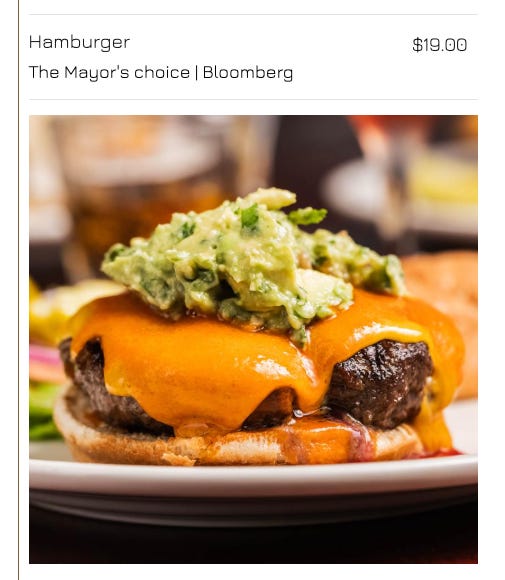
The Bloomberg burger
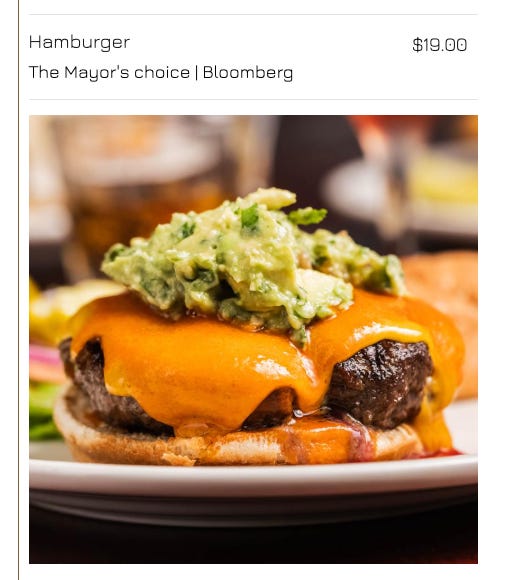
Great Jones—The DTC cookware startup where Emily worked.
Emily in Matt Levine’s Money Stuff—The Bloomberg newsletter that linked to Emily’s early Substack fiction.
Long Island, NY
NY Mag’s Welcome to the Shoppy Shop.
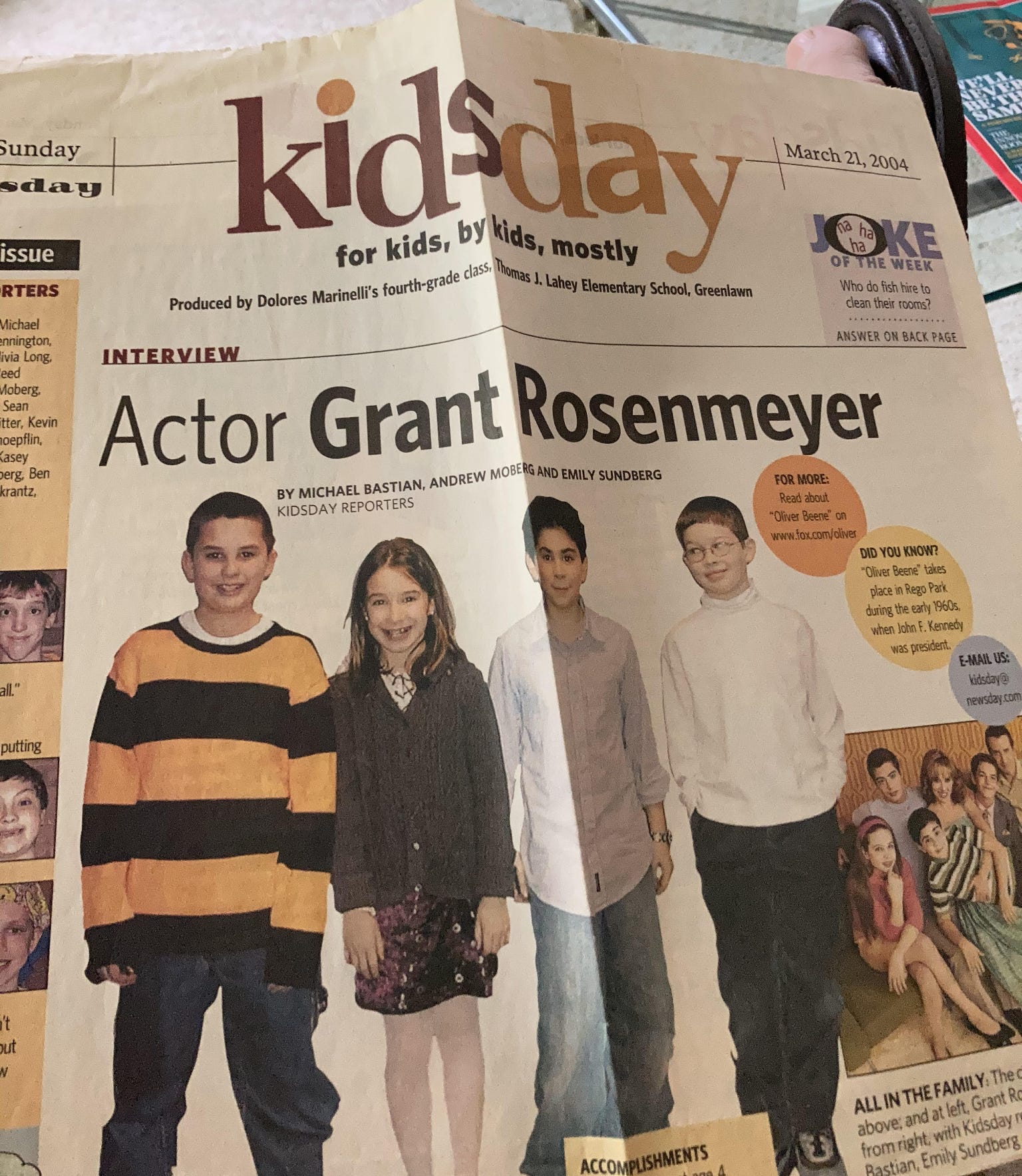
Newsday’s Kidsday—Early scoops from the early aughts.
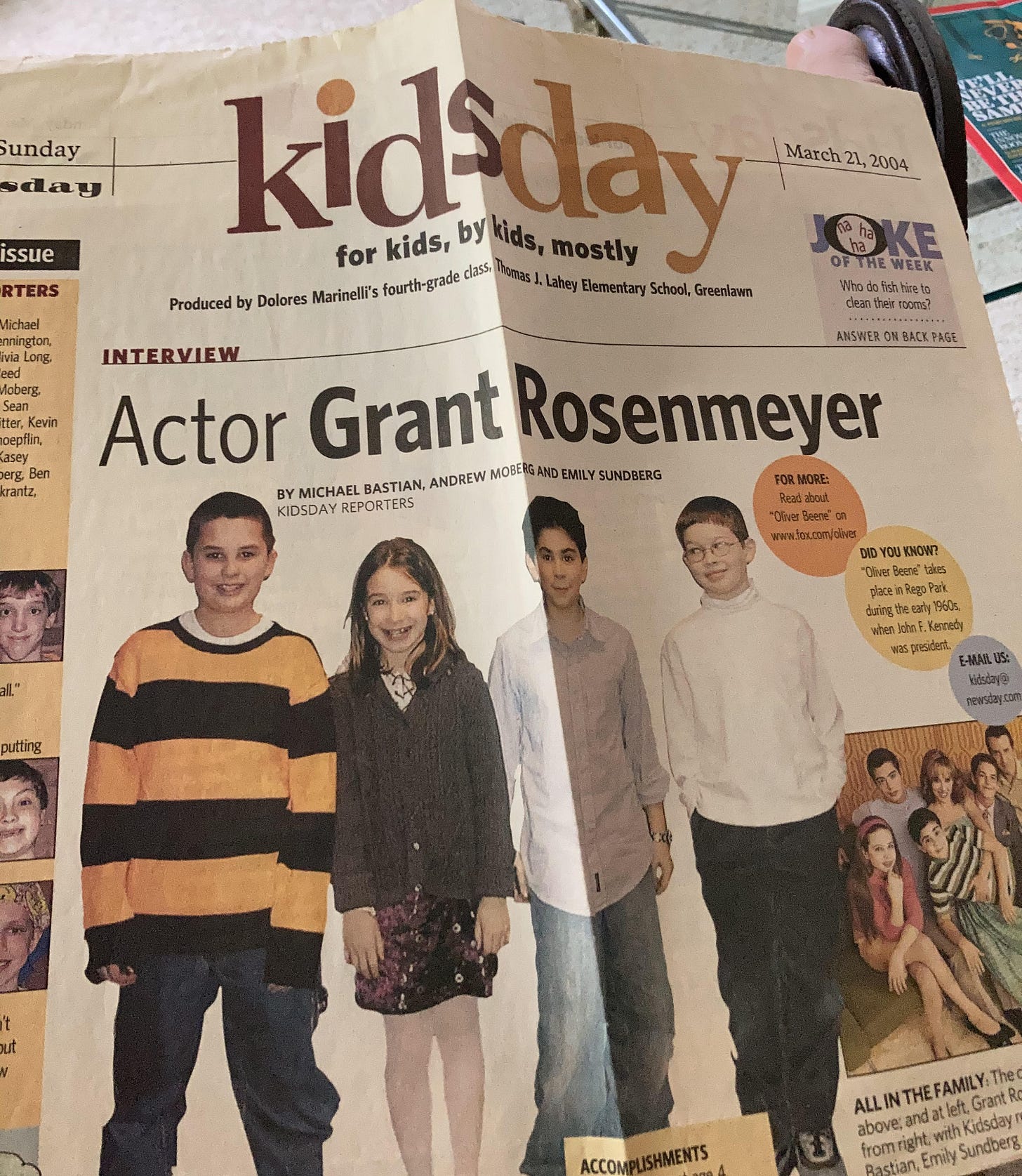
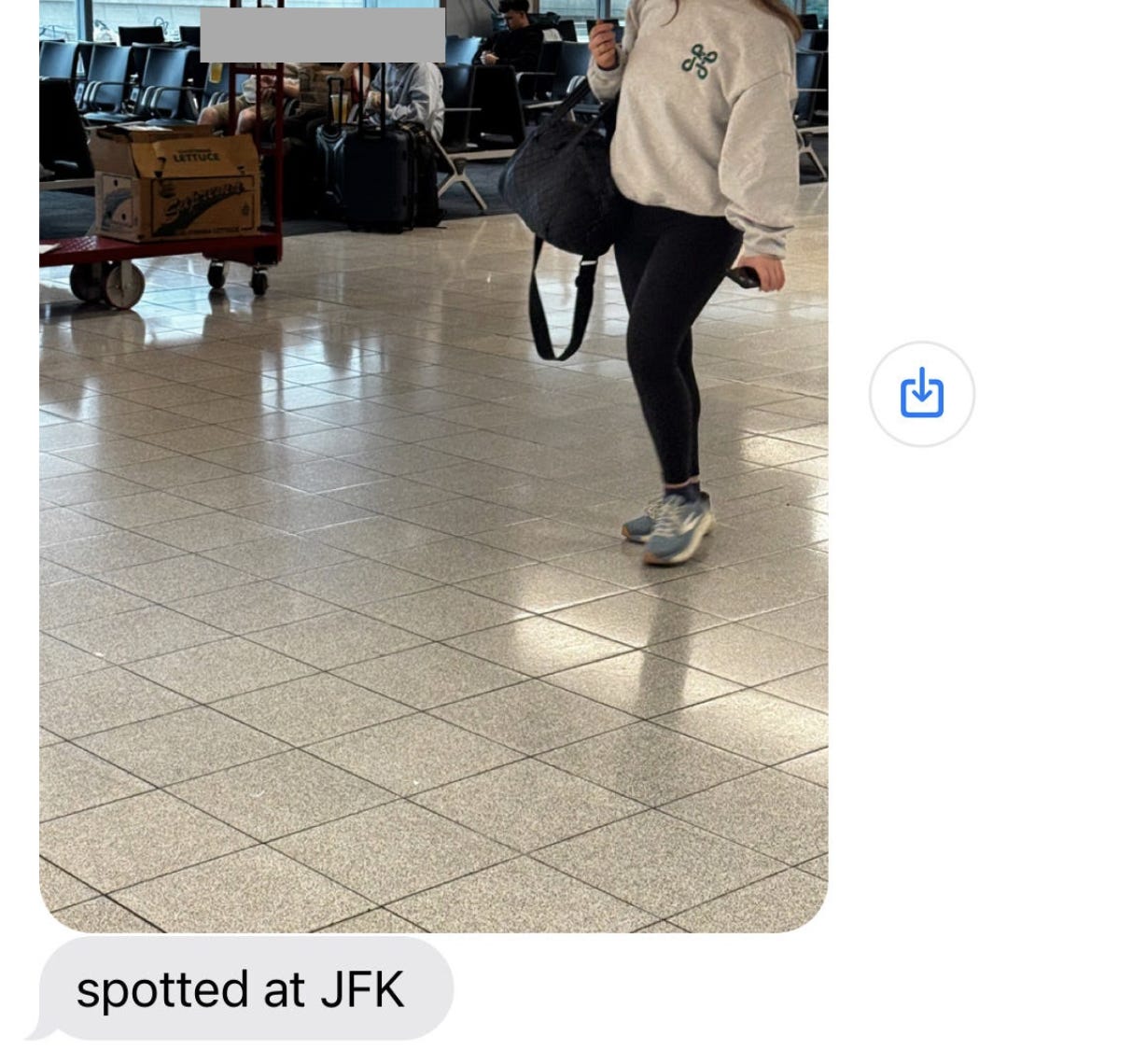
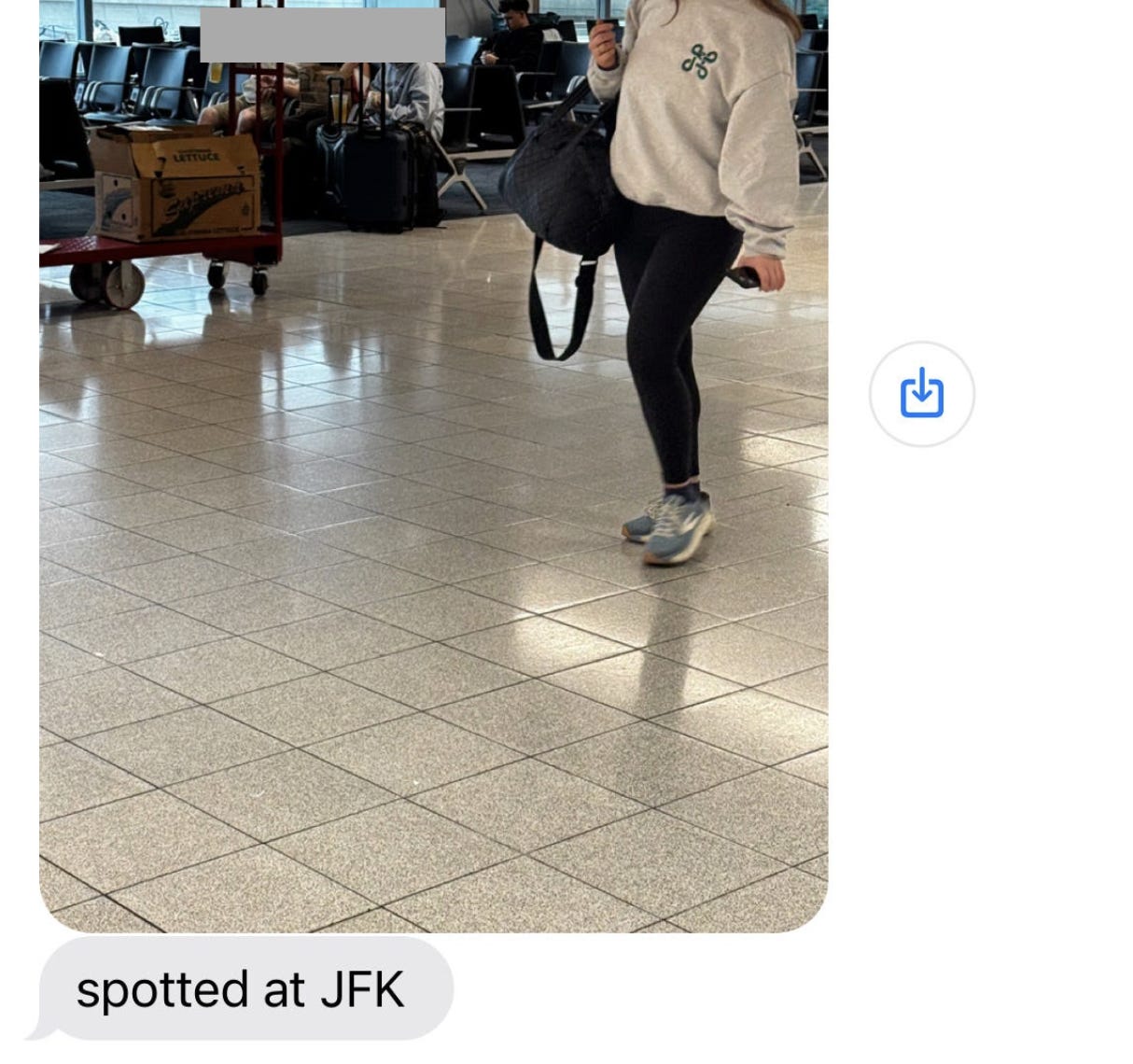
March 21, 2004 Feed Me merch in the wild
The End—Emily’s short documentary about Gardiner’s Island, the oldest privately owned island in America.
Boerum Bulletin—Hyperlocal Substack covering Boerum Hill, Brooklyn.
East Side Rag—Substack focused on Silver Lake and Echo Park in Los Angeles.
Biz Sherbert’s Fashion Week reporting
Nothing sexy happens on Slack—Emily’s survey on sex and the workplace.
And lastly, Babygirl—The Nicole Kidman office-sex drama that Emily says inspired the survey.

New episodes of Open Tab drop weekly through June. You can watch on YouTube, listen wherever you get your podcasts, and always find the full series here on Substack.


