


We sat down with writer, editor, photographer, and futurist Kevin Kelly at the Interval at Long Now in San Francisco’s Fort Mason. Part cocktail bar, part science-centric museum to the future, the Interval houses an eight-foot-tall model of the solar system, artwork by the musician Brian Eno, and prototypes for the Long Now Foundation’s most ambitious project: a clock being built inside a West Texas mountain, designed to keep time without intervention for 10,000 years. Kevin serves on the board of the organization, which believes that a civilization seriously anticipating a long future would think and build very differently.
Kelly is also the founding executive editor of Wired, where he spent the better part of the 1990s helping people understand technology as culture. Before that, he was a key editor and publisher at the Whole Earth Review and a central figure at the Whole Earth Catalog, the legendary tools-and-ideas resource that shaped a generation of independent builders and thinkers from the late 1960s through the 1980s. He is the originator of the “1,000 true fans” theory—the idea that a creator with direct access to their audience needs only 1,000 people willing to buy anything they make to sustain a living—one of the most practically influential ideas in independent media. In his conversation with Substack’s head of new media, Hanne Winarsky, he talks about his journey through tech and media and the subjects he writes about for his Substack audience at his newsletter, KK: taking a prototyping approach to life, why optimism is a daily practice, and some guesses for where we’re headed next.
Hanne: There was no web at the very launch of Wired?
Kevin: The web happened within a year or so of Wired. The first couple of years we were working on it, it was going to be a paper magazine with an online presence. So we started Wired Digital, which was actually in a separate building, and we developed a whole bunch of editors and people, and they were inventing what the media would be like. One of the questions that was really unclear to everybody was frequency. How often do we have to update this? We’re doing a monthly magazine. Are we going to have to update this every month?
Hanne: Oh my gosh. Yes, and then some.
Kevin: The thing that a lot of people did not believe was that people would read online. And secondly, people don’t remember, but in the ’80s, there were a lot of people saying that writing was over. Nobody was going to write. What we learned from the web was: no. People are going to write. Almost any of us writes far, far more words per day than our grandparents ever did. We’re all writers, really.
Hanne: And there’s that optimism again. Part of your thinking about communities and audiences at Wired coalesced into an essay around 2008 called “1,000 True Fans”—an idea that in a lot of ways is very much connected to what Substack is today. Can you describe where it came from?
Kevin: The premise is that if you have direct contact with your audience or your customers, you don’t need millions of them to make a living. If you have a label or a publisher or a studio in between you, then you might need millions. But if you take those away and go directly to them, you just have a much more feasible number to get to. You get $100 per year from 1,000 true fans, you can make it. I defined a true fan as somebody who would purchase anything you made. When I introduced this idea, there weren’t any examples of anybody I could find who was doing that organically.
Hanne: Was your hypothesis at the time that there would be a lot more people doing this?
Kevin: Yeah, I thought the arithmetic made sense. Even the weirdest, wackiest, esoteric idea that only appeals to one in a million people, with 8 billion people in the world, there’s still a thousand people who are going to be into your weird thing. The challenge is going to be finding them and making that connection. I think that’s where the next technology is going to be useful—maybe AI—that would allow you to find your thousand true fans.
Kevin: I talk about inevitabilities in technology. A lot of what we have is inevitable given the whole system. AI is inevitable. Any civilization anywhere in the galaxy that invented electricity and steam engines and motors is going to make AI. But the character of the AI is not inevitable. Quadrupeds as an animal are inevitable on any kind of planet with our kind of gravity, but a zebra is not. The specificity is not inevitable. How it shows up, the particulars, are completely up to us. We have a choice in the particulars, and those choices make a big difference. Who owns AI? Is it public? Is it international? Is it closed? Is it open? How is it financed? All those choices are choices we have. But AI itself is inevitable. Those minds are going to keep coming.
Life is going to continue on. There’s almost nothing we humans could do to eradicate life on the planet. But we can still manage natural systems for our benefit. The same thing with technology. I think we do have to manage it and garden it and steer it. The way to steer technology is through use. You want to embrace technologies and use them, because that’s the only way you get to steer them. If you prohibit them or ban them or refuse them, you don’t get to steer.
Hanne: It’s also the only way you start impacting the particulars, the things you actually control.
Kevin: We cannot think our way to the particulars. I call it “thinkism”—this idea that just thinking about things will solve stuff, [that] thinking about technology, we can figure out what it’s good and bad for. We can’t. We have to actually use it.
Hanne: This systems-level thinking, where do you think it came from? Were you just born with it?
Kevin: I don’t think it began that way. I think it’s something I learned. The way I would describe it now is this prototype approach to the world. What we want to think about is our use of social media right now—we’re still prototyping it. And the idea of prototyping your life rather than deciding what you’re going to do for the rest of your life. You try it for a couple of years and you go on. You prototype everything out of cardboard first. You make one to throw away, as the makers say. The first one you’re just going to throw away anyway.
I’ve collapsed some of that into my idea of “protopia.” We aren’t headed to utopia, where everything’s fine. We’re going to come to a world where things are a little tiny bit better, and we’re just incrementally prototyping our way forward. No massive jumps. Just 1% better, 1% better. That means there could be 49% crap in the world, 49% harm, and everybody knows it. I can make a long list of all the things wrong. But there could be 51% good. That 2% difference is hardly even visible.
Hanne: But it is. We are inching incrementally, prototyping, learning, perhaps painfully. It’s a combination of the immediate now and the very long term. The only way to do anything forever is to do something now, concrete, over and over.
Kevin: You sail forward.
FOOTNOTES
The Interval at Long Now—Fort Mason Center for Arts and Culture, San Francisco.
The Clock of the Long Now—built inside a mountain in West Texas, designed to tick for 10,000 years.


Jeff Bezos—contributed $42 million towards the Clock of the Long Now. Kevin cites him on the competitive advantage of thinking in longer time horizons.
The Whole Earth Catalog—Iconic counterculture magazine and product catalog. Described by Steve Jobs in his 2005 Stanford commencement address as “sort of like Google in paperback form, 35 years before Google came along.”


Woodstock—where Kevin first encountered the Whole Earth Catalog, in a bookstore, in 1969.
Walt Whitman’s Leaves of Grass (1855)—the book that sent Kevin wandering.
The WELL (Whole Earth ’Lectronic Link)—one of the earliest online communities, co-founded by Stephen Brand and Kevin. Among the first places humans encountered flame wars, trolling, and people living with completely different online personas.
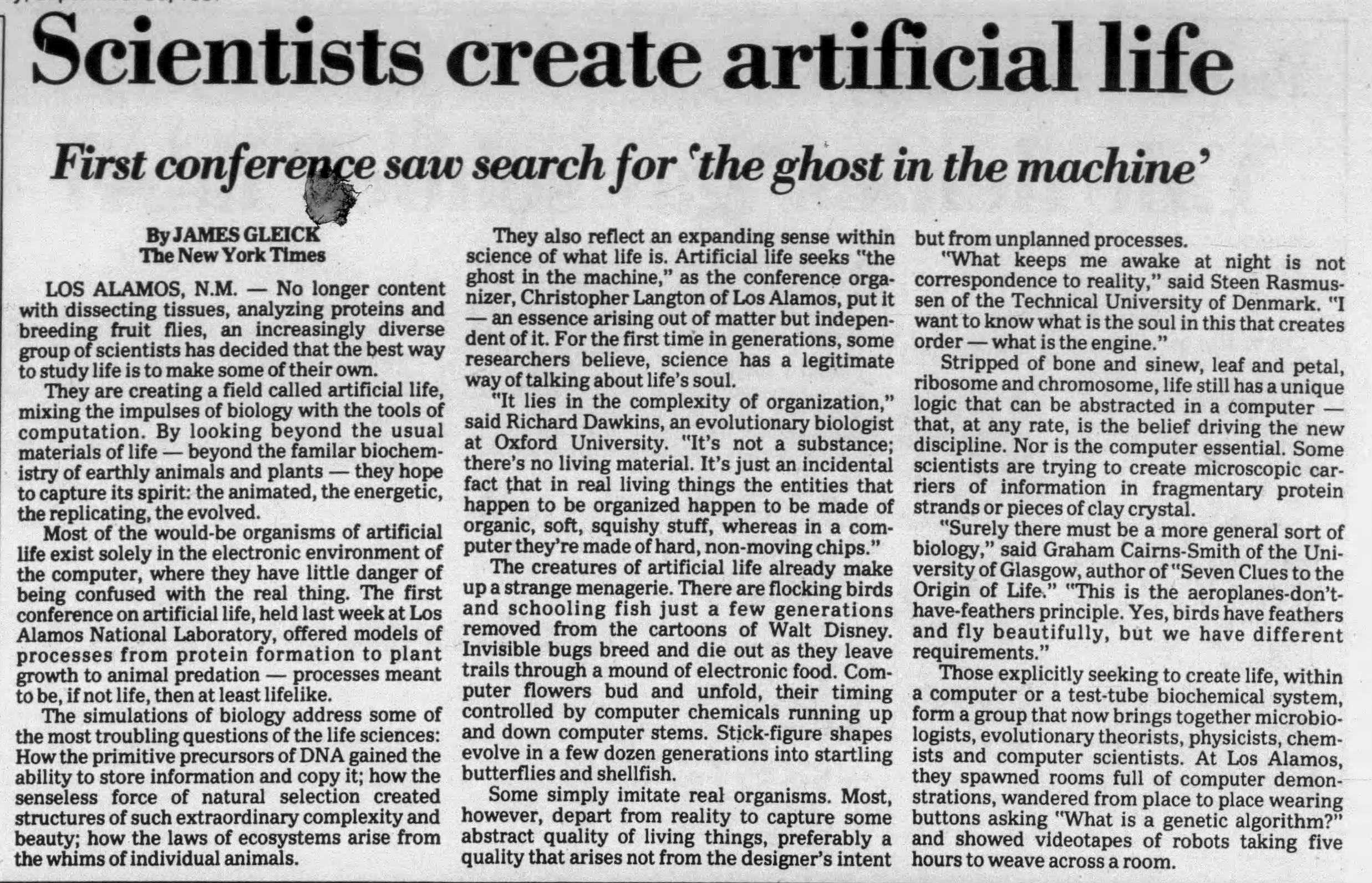
The first Artificial Life conference (ALife I)— Held at Los Alamos National Laboratory in 1987, the scientific gathering launched Kevin’s first book. He attended as a journalist and posted live notes to the WELL, “live-blogging before blogging.”
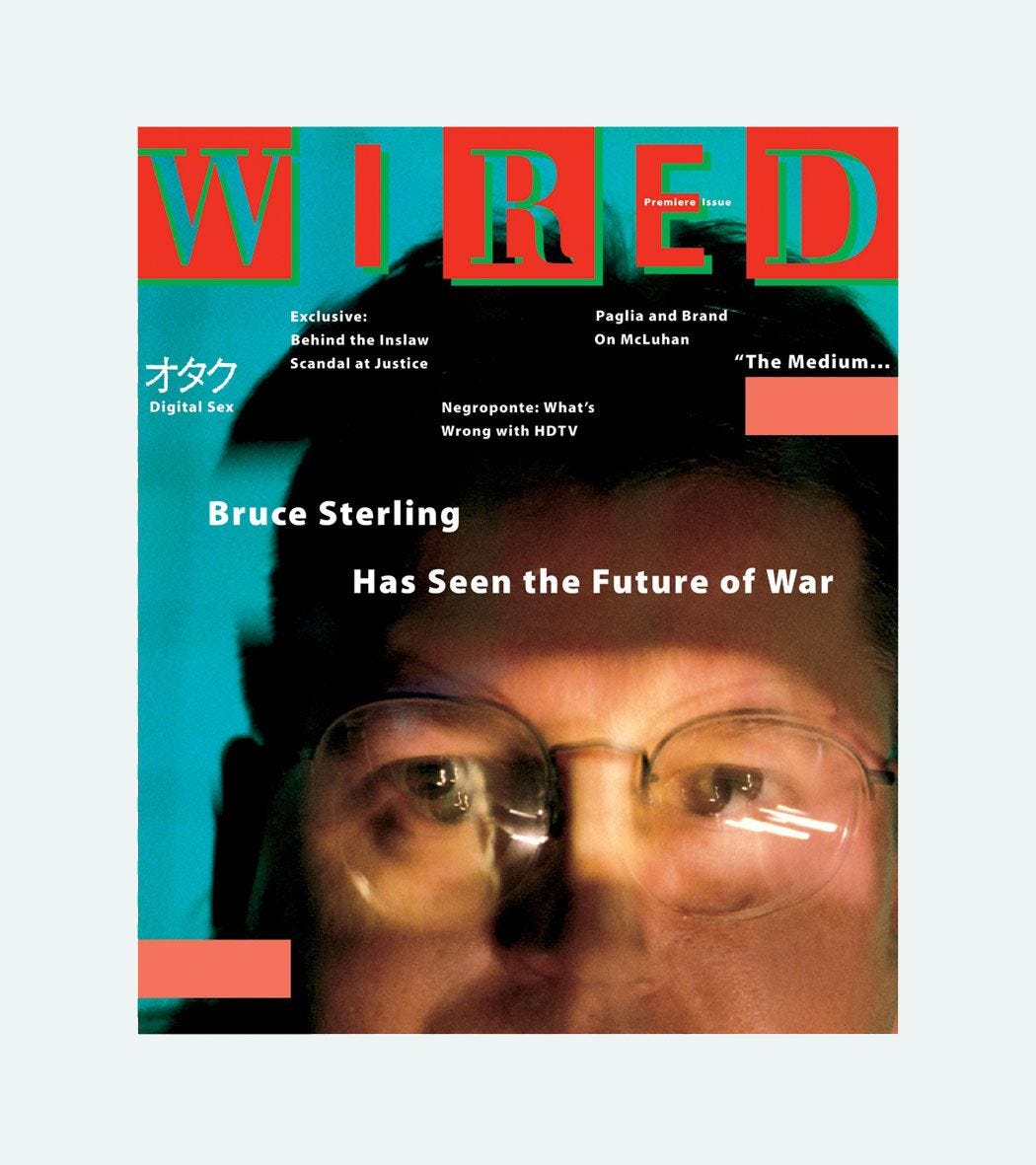
Louis Rossetto—co-founder of Wired, who recruited Kevin with the pitch that the magazine should feel “like it’s been mailed back from the future.”
Wired—launched in March 1993. Kevin served as founding executive editor until 1999. His current title is Senior Maverick.
“1,000 True Fans”—Kevin’s 2008 essay. The math: 1,000 fans who each spend $100 a year = a living.
Kraig Adams—Kevin’s 1,000 true fans example in action. Adams embarks on silent hikes with a drone following him and now sells tickets for fans to walk alongside him in person.

What Technology Wants (2010)—Kevin’s book arguing that technology is not separate from nature but an extension of it. Home of the concept of “the technium,” the self-organizing seventh kingdom of life.
Thinkism—Kevin’s word for the mistaken belief that thinking hard about a technology is sufficient to understand it. He thinks you only get to steer a technology by using it.
Protopia—Kevin’s concept of incremental progress. Not utopia (everything is fine) or dystopia (everything is terrible), but a world that is 1% better, year over year, through persistent prototyping.
Finite and Infinite Games (James Carse, 1986)—A guide to choosing optimism. Finite games have winners and losers and fixed rules; infinite games exist only to keep being played, with as many players as possible. Kevin suggests choosing infinite games wherever you can.
Minority Report (2002)—the Steven Spielberg film for which Kevin served as a futurist adviser.

New episodes of Open Tab drop weekly through June. You can watch on YouTube, listen wherever you get your podcasts, and always find the full series here on Substack.


