


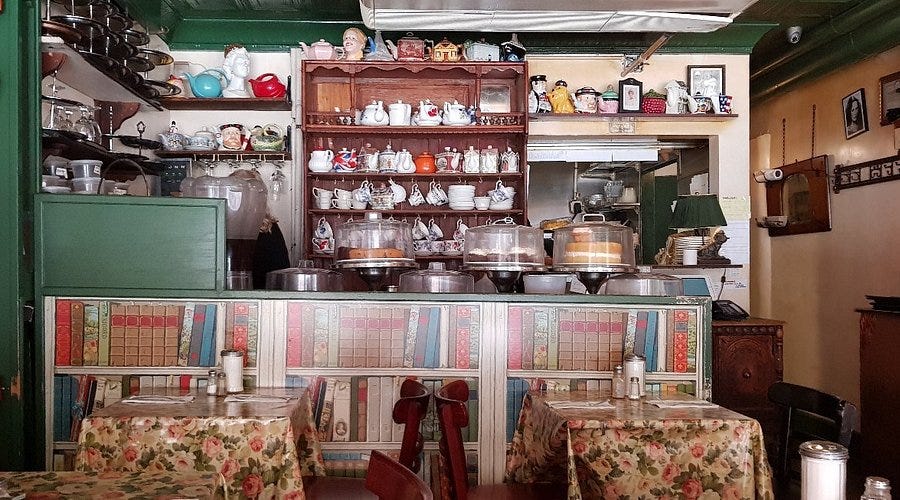
Joanna Coles has spent her formidable career at the center of media: London’s Fleet Street in the ’80s, New York magazine, Marie Claire, Cosmopolitan, and eventually the chief content officer role overseeing Hearst’s entire global magazine portfolio. She knows intimately what legacy media organizations have looked like at every stage of their life cycle and spent years “managing decline” from the inside. Two years ago, as Chief Creative and Content Officer, she helped take over The Daily Beast and bring it to Substack, where it now operates a suite of newsletters and podcasts. She also writes PRIMAL SCREAM with Joanna Coles, her own publication covering politics and power and where she co-hosts and sends out The Daily Beast Podcast to an audience of over 70,000 subscribers. Joanna invited us for a cup of tea and a slice of cake at Tea & Sympathy, a West Village institution that has been importing British calm to Manhattan for over 30 years. There, she and Substack’s head of new media, Hanne Winarsky, talked about the golden age of the glossy mag, the two questions Cosmo readers have never stopped asking, and what life looks like on the other side of the old media order.
Hanne: For somebody growing up today in journalism school who might not know what old newsrooms were like, what was the culture?
Joanna: Well, I mean, first of all, they were incredibly noisy because you had typewriters. And I am not exaggerating when I say that you would get seven pieces of paper, seven pieces of carbon paper. You would put it into the typewriter, and you would have to think very carefully about what you wanted to say, because if you made a mistake, you had to either rip the whole thing out and start all over again or you had to correct it seven times. And you would have what was called Tipp-Ex whiteout, where you had to cross it out. So there was more planning ahead of what you were going to write. It was fantastically noisy. Then computers came in, and half the newsroom, largely men, would say, “Well, I’m not going to use a computer. That’s ridiculous. There’s nothing wrong with a typewriter.” And of course, those people just disappeared out of the newsroom. But it was a very fun, lively culture, and you felt like what you were doing was important, because it was a way of getting information to people. And it was tribal, so people read The Guardian, and that was their tribe. They read the Daily Telegraph or the [London] Times, and that was their tribe. And now of course, we’re inundated with individual voices coming at us, which you don’t really have a sense of their tribe necessarily. Of course, you know, there are lots of newspapers still going, but it’s not quite the journey that was curated for you by the older editors.
Hanne: It was presumably pretty male-dominated at the time, those newsrooms?
Joanna: It was very male-dominated. I worked on Fleet Street when I was working on the Daily Telegraph, the legendary Fleet Street. So you had the high courts at one end, you had St. Paul’s [Cathedral] at the other, and in between you had the big British newspapers. And so at the end of the day, all the journalists would roll out of the various papers and congregate in two or three pubs, the best of which was called El Vino, which is still there. But the crazy thing about it was—and this was in the ’80s—that women weren’t allowed to order or pay for drinks.
Hanne: That’s unbelievable.
Joanna: Isn’t it? Of course, now I look back on it through the lens of, you know, feminism, and think: how outrageous. But at the time, me and the smattering of girlfriends I had in the newsroom were like, “Well, this is great.”
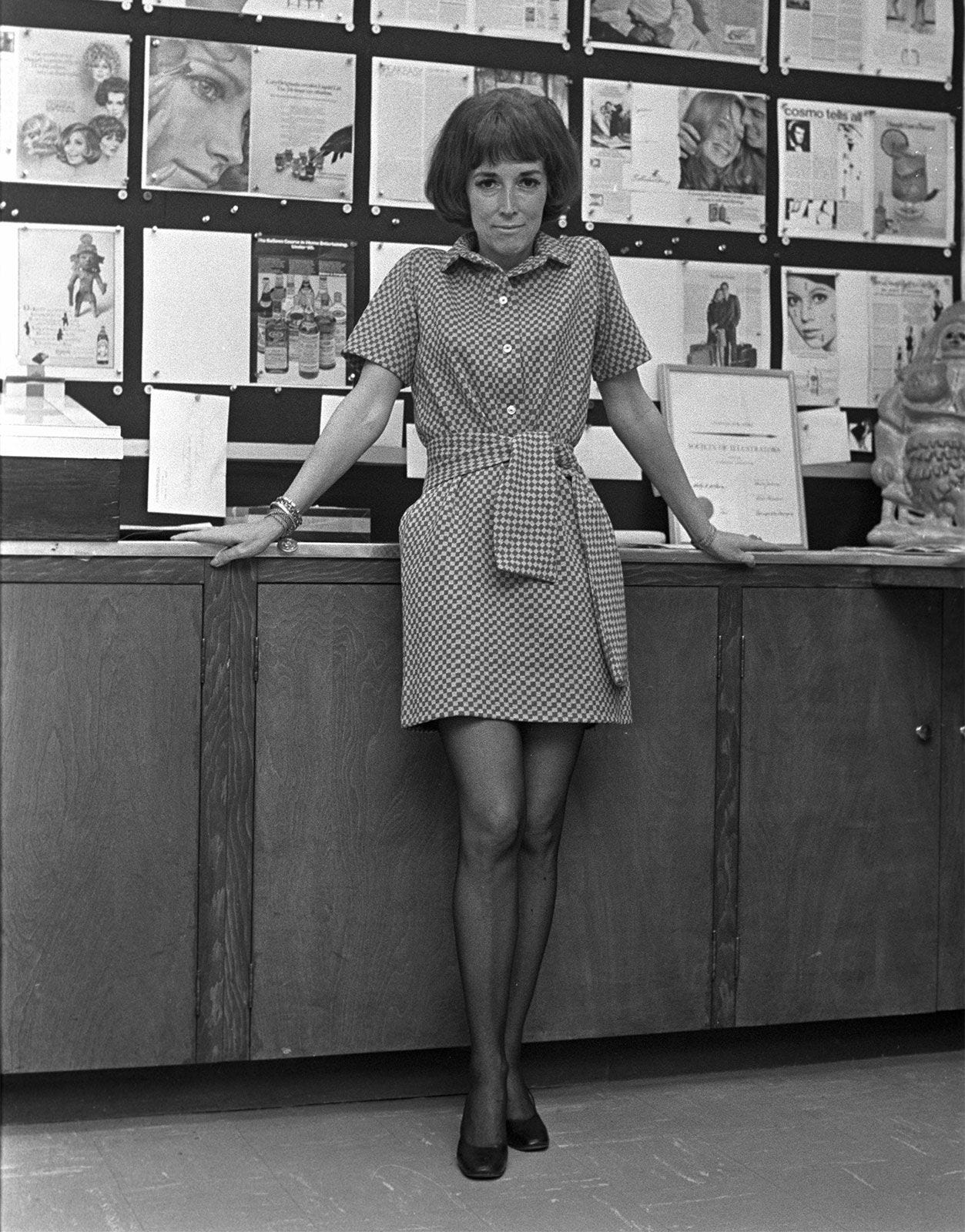
Joanna: When I was editor of Cosmo, we got two questions all the time, consistently the entire time I was there, and this is probably going back through time immemorial, through Helen Gurley Brown’s days, which were “How do I have an orgasm?” and “How do I ask for a raise?” Every month, my monthly mailbag, those were the two dominant questions. So those were the two things we were trying to answer.
Hanne: So it wasn’t changing the direction, actually. You were listening to what was already being asked for and leaning more into that.
Joanna: Well, I’m assuming those questions came in before I was there. And it wasn’t “How do I give my husband or my boyfriend an orgasm?” It was like, “How do I have one?” And then it was like, “How do I make more money?” Because there was a sense in which women understood they were probably being underpaid—which they were—and they wanted to have the power to ask for something, and be successful at it.
Hanne: When you left Hearst you said, “My route is being recalculated.” What did you mean?
Joanna: The impact of digital on a magazine company was enormous, and I was, in essence, doing what a lot of editors were doing, which is managing decline. And I have managed decline well. We had declined, in terms of market share, probably less than other people. But at a certain point, there’s a moment when you want to start leaning into growth and doing something fresh. And I had been at Hearst for 12 years, and it felt like, oh, there’s a gap in the clouds here where I can sort of take off. My kids were older, and I’d had an absolute blast, but it wasn’t going to last. You know? I think everybody in magazines knew there was a train driving straight at you called digital, and it was going to mow you down, and it was much less fun than it had been.
Hanne: If you’ve worked hard at a professional career you always have moments where something is changing direction in a way you didn’t expect, or perhaps you did but you weren’t ready for. And I love that idea of leaning into it instead of just accepting it.
Joanna: It’s very easy to get stuck. You see people get stuck all the time, and then you see it’s too late for them to change, and you can’t get out. And so I had a moment in the clouds when I could get out. I had a fantastic time at Hearst. I loved working there. But these are hard jobs, and you can’t build the railroad fast enough to keep the train from mowing you down. Or at least that’s what it felt like in the moment.
And now these magazines don’t exist, you know? They just don’t—the physical product, for the most part, doesn’t exist anymore, and it’s not as luxurious, and it’s not needed as much because it’s impossible to compete with the phone. The phone is a fabulous device. These people that say, “Oh my god, the phones.” I’m like, “What are you talking about?” The phone keeps us connected. It’s fantastic. There’s so many ideas in there. I can do everything on my phone. It’s incredible. And so to keep sort of running after the phone with an old magazine, sort of saying, “It used to be better in my day”—it’s not true. The world has changed. And you want to be part of that change.
Hanne: When you look at the media landscape today, where do you see the most innovation happening?
Joanna: Well, I think the most innovation is happening on platforms like Substack and YouTube, because people are figuring out what works, what people tune in to. And people are feeling more confident in their voices, I think, which means we hear from a lot of voices that we don’t normally hear from, because they’re mediated by media. And some of them are alarming, and some of them are really interesting, and I love the fact that you can get your own audience by having an authentic voice.
[Before] there just weren’t these places for individual voices to go, and so they were trapped within an old media ecosystem that couldn’t pay them enough, that wouldn’t give them direct connection with the reader. And now we have this incredible set of platforms where you get direct connection with the audience. And you get to do what you’re good at without the heavy hand of corporate America squashing you down, which is often what happens.
Hanne: Do you find your voice changing now that it’s on Substack, that you’re unleashed in a different way?
Joanna: A little bit. For me, Substack is a bit like early Twitter. I was a big adopter of Twitter at the beginning. I absolutely loved it. It felt like you were having a conversation with writers. You could discover all sorts of new voices. And since Elon Musk’s taken over, it’s just completely changed. You get this kind of endless negativity coming in, which doesn’t even feel real. It’s not relevant to me. It doesn’t feel real or useful. Whereas Substack, actually, you feel like, “Oh, I can have a conversation with this person. I love the way this person writes. Oh, I can reach out directly to them.” So you have this sense of a real directness of content, which is kind of high.
FOOTNOTES
Tea & Sympathy, 108 Greenwich Ave., New York—Cozy British tearoom and shop owned by Nicola Perry and her daughter, Audrey Kavanagh-Dowsett who produces and publishes the shop’s interview series on Substack.
Ginger cake—served warm with custard.
The Junior Yorkshire Post—where Joanna published her first piece at age 10, for which she was paid £2.
The Spectator—where Joanna began her journalism career in 1984.
Fleet Street—London’s historic newspaper row. Home to the Daily Telegraph, where Joanna worked in the late 1980s, along with most of the major British national papers.
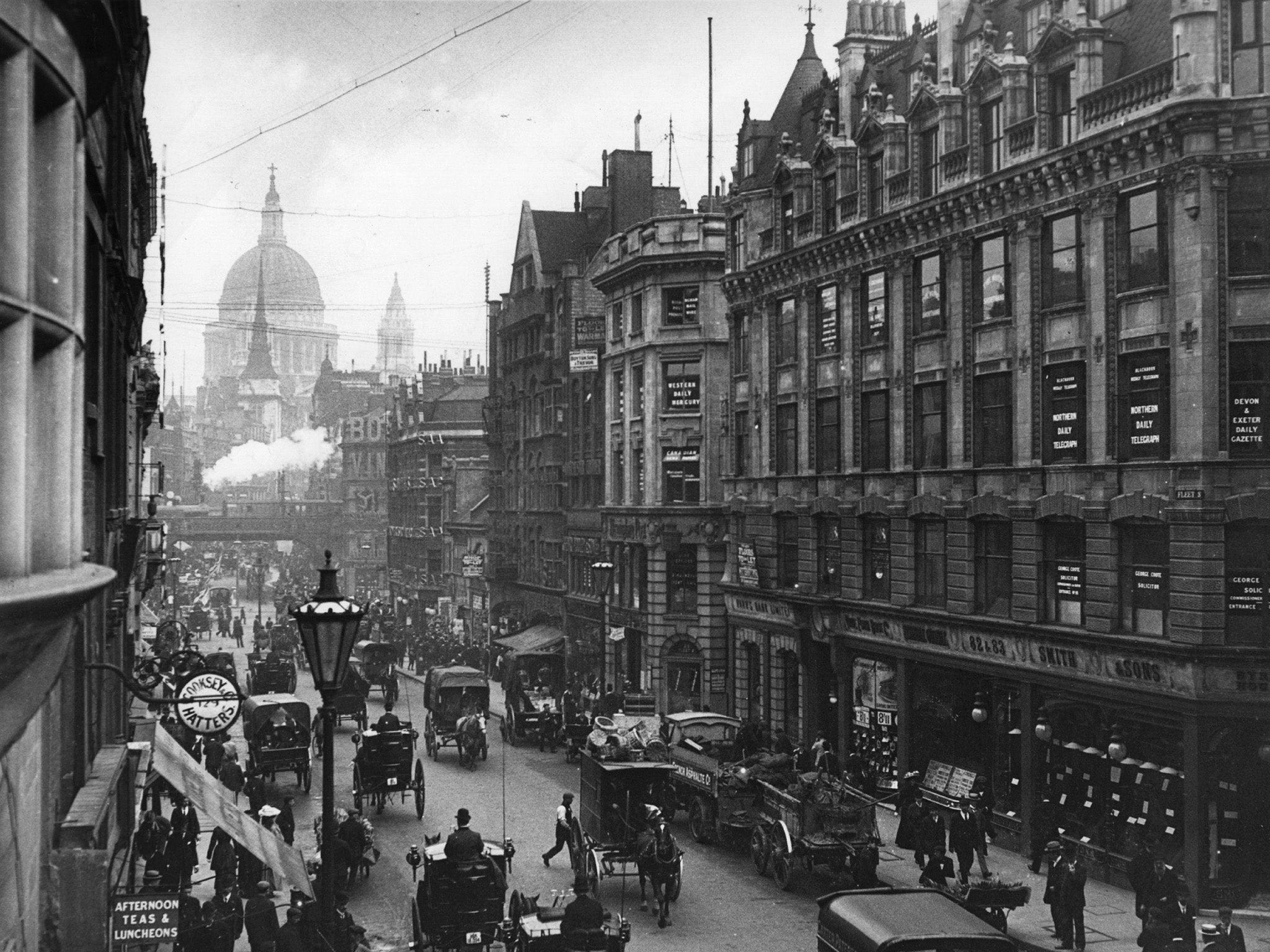
El Vino, 47 Fleet Street—Storied wine bar, still open.
Emma Tucker—editor in chief of the Wall Street Journal. She and Joanna covered the same IRA bombing in their early 20s.
Helen Gurley Brown—Cosmo’s transformative longtime editor. Joanna: “She really re-created the modern template for a magazine. Vanity Fair wouldn’t have existed without Helen Gurley Brown, I don’t think.”
E. Jean Carroll—longtime Elle magazine advice columnist. Writes Ask E. Jean.
Michael Wolff—author of Fire and Fury and three subsequent books on Donald Trump. Writes HOWL. He and Joanna co-host a podcast three times a week.
Andy Borowitz—longtime New Yorker satirist, later let go. Now writes The Borowitz Report on Substack.
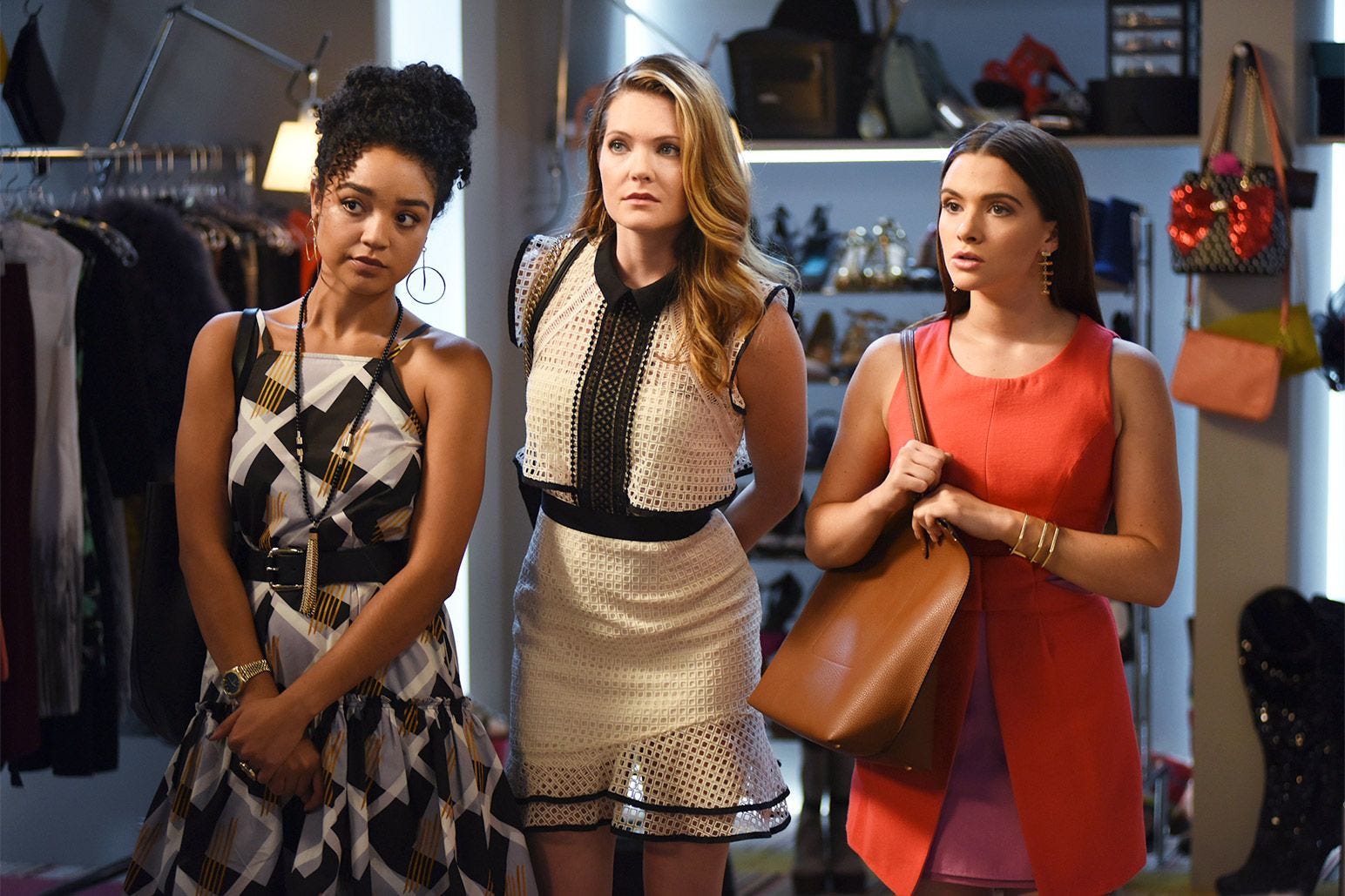
The Bold Type—scripted TV series on that was loosely inspired by Joanna’s career.
New episodes of Open Tab drop weekly through June. You can watch on YouTube, listen wherever you get your podcasts, and always find the full series here on Substack.


